
Building More for Less
Contents
- Executive Summary
- Introduction
- Overall Investment
- Britain's High Costs
- Cost Difference
- Investment Shortfall
- Conclusion
- References
 Britain Remade |
  Centre for British Progress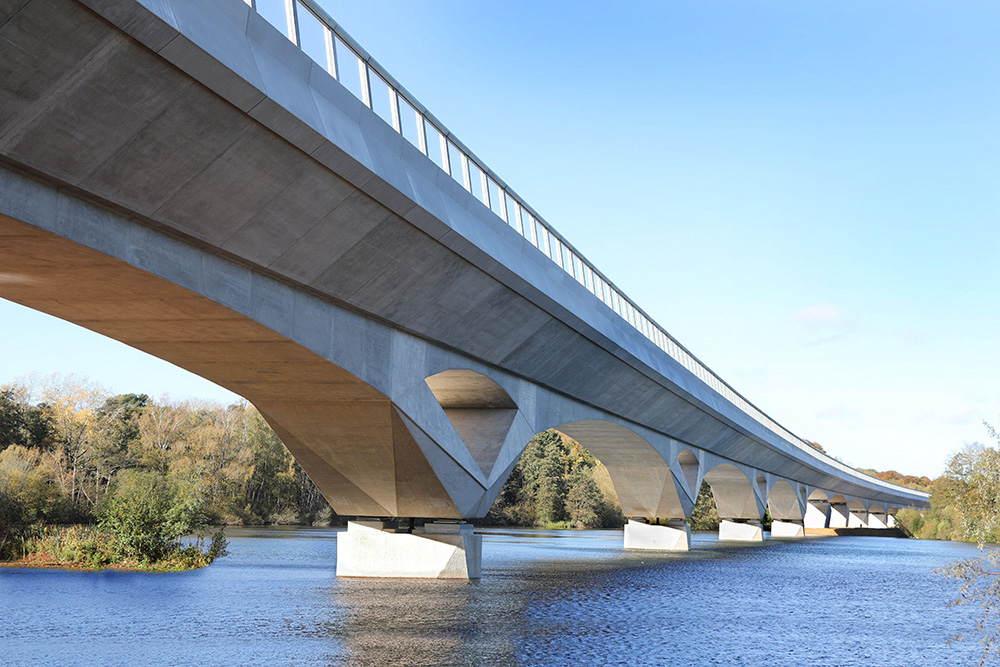
Building More for Less: A cost-free path to European levels of investment
Sam Dumitriu, Michael Hill, David Lawrence and Pedro Serôdio
Building More for Less: A cost-free path to European levels of investment
Contents
- Executive Summary
- Introduction
- Overall Investment
- Britain's High Costs
- Cost Difference
- Investment Shortfall
- Conclusion
- References
Executive Summary
Contrary to what has become a standard view in policy circles, the British state does not invest far less than its peer countries. British public investment (as a share of GDP) is on par with the OECD average and higher than it is Germany, Italy and Spain. Indeed, when it comes to transport, we spend more: about 22% more than the OECD average.
Britain’s broken system of infrastructure investment has limited the number of projects delivered by the Government, dragging down Britain’s living standards. Britain differs from peer nations in that, while we spend as much or more than other countries, we get less back for it. For the same amount of money, other OECD countries manage to build more: whether it’s miles of railway track, tramlines, or nuclear power stations. To put it another way, Britain suffers from an infrastructure investment cost premium, which is downstream of our dwindling state capacity: we pay more for the same thing.
We find that Britain faces an infrastructure premium of between 23% and 93%, depending on the type of project.
| Infrastructure Type | Cost Premium relative to average of Germany, Italy, Spain, France, South Korea and Canada |
| Road | 23% |
| Rail and Tram | 93% |
| Nuclear | 53% |
On average, the UK pays 65% more per unit of infrastructure than comparable countries. This translates into £8.3 billion a year wasted, or £122 per person, due to spending failing to deliver equivalent infrastructure. Costs are consistently higher across all modes.
If our infrastructure cost premium is tackled, a new wave of public investment could unlock life-changing infrastructure without requiring higher taxes or borrowing. Lower delivery costs would mean more tramlines, rail upgrades, roads, clean energy projects and local infrastructure for the same money, raising living standards for ordinary people and boosting British growth. A new approach could also push power down and out of Whitehall. Our cost premium means that projects that could otherwise be funded by existing local taxes, such as the Workplace Parking Levy which funded Nottingham's tram network, or partnerships between business and local government, as proposed for HS2’s Northern Leg, can only be funded with support from the HM Treasury. Instead of a system where decisions on what gets built must go through the Treasury, more responsibility would sit with the places that know what they need and have a direct stake in delivery. That would mean more construction jobs, more skilled engineering work, stronger local supply chains and less public money absorbed by lawyers, consultants and paper exercises in Westminster. The result would be a state that micro-manages less and delivers more.
Why does Britain get less for more?
We find that our planning and regulatory regime, combined with associated legal risks, significantly raise the cost of building. Public money gets spent on lawyers and consultants, as well as complex, often unique design specifications to meet bespoke requirements, rather than on actual infrastructure. This is a vicious cycle: more requirements increase the surface area for legal challenge, and more delay increases the cost of financing projects.
Britain is also far more centralised, with far weaker fiscal devolution, than most comparable countries, and this directly undermines the ability of cities and regions to build infrastructure on their own initiative. This exacerbates the issue. Local and combined authorities have limited power to approve or fund new transport infrastructure. Permission must be sought from the Department of Transport, and funding granted by the Treasury. Comparable countries let the places that gain from infrastructure raise the revenue to pay for infrastructure, but in Britain, the system leaves a range of bodies to impose requirements on a project, without any bearing of the cost of this to the taxpayer or residents who miss out from infrastructure. This separation between who pays, who benefits, and who approves creates a systematic misalignment of incentives which has left Britain worse off.
Perhaps counterintuitively, Britain’s infrastructure premium is good news. It implies that, without spending an extra penny, Britain could vastly improve its public infrastructure by adopting the same processes as those of France, Germany or Spain. Planning, regulatory and legal constraints, and our centralised system, are all within the Government’s control. In times of constrained public finances, it is surely welcome news that we can vastly improve infrastructure without demanding more of taxpayers.
The parallel implication is a warning: we should not expect as much benefit, relative to other countries, from spending more on public infrastructure, because of Britain’s cost premium. Until we fix the underlying causes of Britain’s high infrastructure cost, spending more money on infrastructure will lead to more delays, overruns and broken dreams.
People increasingly do not trust their political leaders, and do not believe that the state can deliver. Our research shows that, at least when it comes to infrastructure investment, this sentiment is not unjustified. Politicians promise new infrastructure, and spend lots of money on it, but rarely deliver it on time or within budget – and sometimes, not at all.
At its core, Britain’s cost premium is a failure of state capacity. Until we can identify and arrest the constraints and mechanisms that prevent us from building well, the state remains impotent, unable to deliver the infrastructure we need, against a tide of public anger and discontent. This report aims to find a way out of these binds, which is the first step to creating a state that can deliver.
 Introduction
Introduction
Britain’s public sector investment levels are on par with France, Germany, Italy, or Spain’s (hereafter EU-4). Within public investment, there is one category where Britain consistently out-invests its EU-4 counterparts: transport.
Britain invests 0.95% of GDP per year on transport infrastructure like roads, railways, and trams. That’s 22% higher than the OECD average of 0.78%. Germany, France, Italy, and Spain all invest less than us.
The purpose of investment, whether in new equipment or new infrastructure, is to acquire long-lasting assets that generate an income or improve productivity. International comparisons of investment tend to measure the total amount invested, represented as a share of GDP. This is a measure of an input–e.g. how much is spent on high speed rail–not an output–e.g. the amount of track built. This is a problem, because past research from Britain Remade has found large differences in the cost of building new infrastructure. Some projects cost a lot more, such as HS2, a high-speed railway line under construction between London and Birmingham. Per mile of track, HS2 will cost at least 15 times more than France’s Tours-Bourdeaux high speed line.1
Britain Remade has collected spending data from 345 transport projects across 21 countries, including 121 road projects and 224 rail and tram projects. Outside transport, Britain Remade and Centre for British Progress have also analysed spending data on every nuclear project built since 2000 — 36 projects in total.
In each area, British projects are significantly more expensive than comparable projects delivered in similar European countries. Analysis from the Centre for British Progress, which controlled for a range of factors, shows that Britain pays an infrastructure cost premium of between 23% and 93%, depending on the type of project.2
| Infrastructure Type | Cost Premium relative to average of Germany, Italy, Spain, France, South Korea and Canada |
| Road | 23% |
| Rail and Tram | 93% |
| Nuclear | 53% |
Britain could, it follows, produce the equivalent of a large increase in public investment merely by holding existing levels of spending constant if build costs were reduced to European levels. Britain’s infrastructure cost premium implies that, each year, £8.3bn worth of infrastructure is funded but not delivered. Over a five-year Parliament, this represents the equivalent of a £41.5bn investment shortfall. If we reduced building costs to the same level as other European countries, the same infrastructure budget would deliver the equivalent of a £122 per person annual increase in transport spending.
This paper analyses Britain’s investment shortfall in the context of the country’s infrastructure cost premium. The paper is divided into three sections. In the first section, the UK’s persistently low-levels of investment over the past three decades are summarised and analysed. The second section looks at the UK’s infrastructure cost premium. Using data from 345 infrastructure projects, it establishes that outside of the US and Canada, Britain is the most expensive country in the world to build new transport infrastructure. The third and final section assesses the impact of reducing the UK’s infrastructure cost premium to European levels.
 Overall Investment
Britain’s overall investment levels are low by international standards but transport investment is high
Britain invests less than all other G7 nations as a percentage of GDP. Only 18.6%3 of our £3tn GDP4 is invested in new fixed capital, well below the G7 average of 20.7% and the OECD average of 22%.5
This shortfall is overwhelmingly driven by weak private sector investment. UK corporate investment stands at just 11.1% of GDP, compared to 13.8% across the OECD. In France, business investment is 12.0% of GDP, in Germany 11.9%, and in Italy 10.7%.
Investment, or ‘Gross Fixed Capital Formation’, is spending on long-lasting assets that generate future economic output, most of that is new plants, machinery, equipment and infrastructure. However, not all of it is physical. In 2025, just under third of investment went into intellectual property, primarily research and development and software.
For physical investment, the largest component was housing, which accounted for 26% of total investment. Non-residential buildings and structures made up a further 23%, while ICT and other machinery and equipment accounted for 13%. Transport investment, including roads, railways, and vehicles such as vans, lorries and trains, made up 6%.6
Several governments have taken steps to address Britain’s weak private investment. Before 2023, the UK had some of the least favourable tax treatment of business investment among advanced economies. To rectify this, in April 2023, the government introduced “full expensing” on a temporary basis, allowing firms to immediately deduct the full cost of capital investment, excluding buildings and structures, rather than writing it off over many years. This policy was later made permanent, with cross-party support.7 As a result, the UK’s tax system for business investment has shifted from being one of the least competitive in the OECD to one of the most.
However, the private sector’s ability to invest is severely constrained by the planning system. Its effects are both direct and indirect.
The direct effects are substantial. Just under half of investment in 2025 was in buildings and land. This represents billions of pounds of British public and private investment spending that is subject to the planning system and any restrictions. Similarly, a significant share of public transport investment is impacted.8
There are also important indirect effects. Tax incentives to invest in people, machinery, IT systems and vehicles are welcome. But without buildings to house workers and machinery, or roads for those vehicles to operate on, many of these investments do not go ahead. Planning constraints also contribute to high energy costs, further reducing the attractiveness of investment across the economy.
In contrast to weak private sector investment, UK public investment is broadly in line with its peers. At around 2.88% of GDP on average from 2015-2023, it sits slightly below the OECD average, though this largely reflects higher investment rates in Eastern European economies benefiting from catch-up growth and EU funding.
Compared to large Western European economies such as France, Germany and Italy, UK public investment is unremarkable. These countries invest an average of around 2.92% of GDP, placing the UK firmly in the middle of the pack.
Transport is the clear exception to Britain’s otherwise weak investment spending. The UK spends a higher share of GDP on transport infrastructure than most European countries, including countries such as France and Germany that have significantly better roads, railways and urban transport systems.
Most countries that outspend the UK are former communist economies with historic under-investment in infrastructure, which are now investing heavily to catch up with Western Europe.
However, Britain’s above-average investment in transport does not result in above-average outcomes. For example, France has 28 tram systems,9 over 7,300 miles of motorway,10 and over 1,700 miles of high-speed rail,11 compared to just 7 tram systems,12 2,300 miles of motorway,13 and 68 miles of high speed railway in the UK,14 despite our economies being a similar size. Yet Britain still spends around 12% more on transport investment as a share of GDP. If Britain could match French outcomes, we would have trams in Leeds, Bristol, and Liverpool; motorways connecting Sheffield and Manchester; and a HS2 that makes it to the North of England.
Our fundamental problem is value for money. When Britain invests in public transport, it pays more and receives less.
Case Study: HS2
HS2 is the most prominent example of how Britain's cost premium doesn't just waste money but stops infrastructure being built at all. Conceived as a high-speed line linking London, Birmingham, Leeds and Manchester, it was cut back to London-Birmingham as costs spiralled, leaving the North without the railway it was promised. In scale it is unusually large, but in terms of its disastrous implementation it is fairly typical. Removing HS2 from our sample reduces the UK rail premium from 93% to 79%.
Originally conceived as a £30 billion high-speed railway linking London, Birmingham, Leeds and Manchester,15 it has since been scaled back to just the London–Birmingham section and is projected to cost between £87.7 billion and £102.7 billion.16
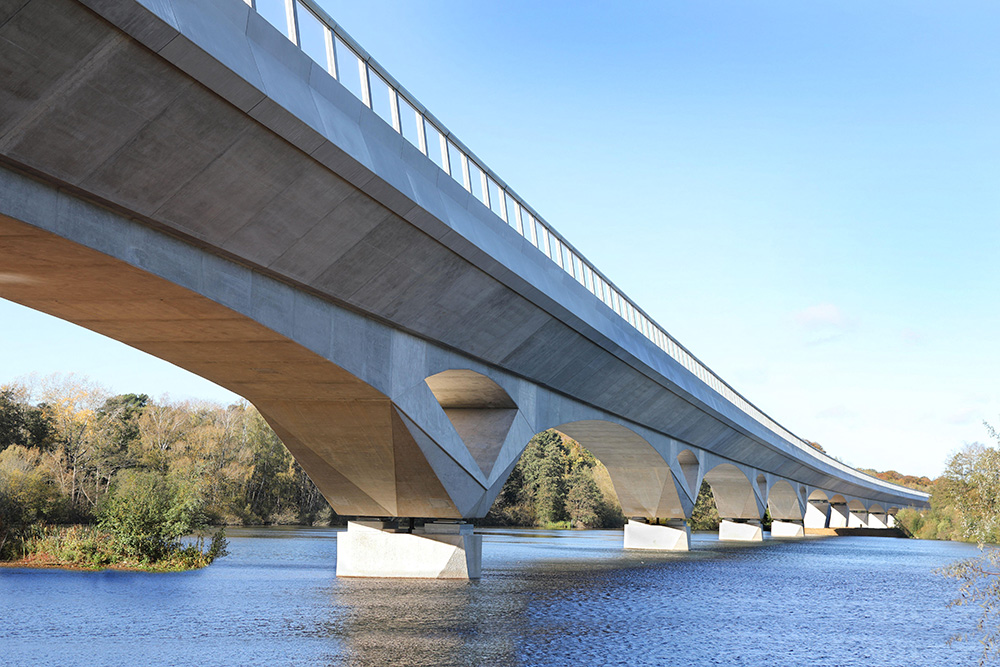
In an effort to bypass the complexities of the planning system, HS2 was taken through Parliament via a bespoke “hybrid bill” process. This failed to control costs. As the bill progressed, it accumulated an expanding set of requirements. The Colne Valley Viaduct, a two-mile bridge through parkland northwest of London, was required to be of “international significance”, “a sympathetic and imaginative design”, and “a suitable symbol of the country’s future high-speed network”.17
Another example is the Chiltern Tunnel. This is an 8 mile long tunnel under the Chilterns to the north west of London. There is no engineering or rail related reason for this tunnel to exist. Instead it was initially designed to pre-empt environmental concerns. No weight was placed on the fact that the much wider M4 motorway is at points less than 3 miles away. However the initial 8 mile long design was not sufficient for the local council and the local MP who campaigned for years to get the length increased. While plans to make it 15 miles long (which would have cost another £485 million18) were unsuccessful; they did succeed in adding an extra 2 miles to the tunnel at a cost of at least £46 million.19 These costs are all pre-project estimates, at present no final costs are available. However in general tunnels cost 2 to 5 times as much as constructing a train on the surface. Combined the total bill for the Chiltern Tunnel and the Colne Valley Viaduct came to £1.6 billion.20
As with many UK projects, a wide range of agencies and quasi-governmental bodies had significant influence over the design, often without clear accountability for cost. One widely cited example is the “bat tunnel”, a mitigation measure that cost around £115 million in 2023 prices.21 Local councils and local residents have also added significantly to costs. In Wendover, to avoid use of a residential street by one truck a day for a 12 week period, councillors engaged in a lengthy process (all at taxpayer’s expense) proposing schemes that ultimately resulted in the destruction of hedgerows and farmland.22
Poor project management compounded these problems. HS2 has been criticised for “gold-plating”, for example, designing the railway to run at higher speeds than comparable European lines, turning a proven model into a bespoke engineering challenge.23 Strikingly, the Stewart Review into HS2 struggled to identify who made some of these key decisions24, exemplifying the poor project management that has been part of the project throughout.
Finally, the project became highly politicised. While periods of consistent ministerial oversight improved decision-making,25 more often political intervention led to design changes, delays in approvals, and a reluctance to confront rising costs. Each of these added further expense.
 Britain's High Costs
Britain spends more on transport infrastructure, but gets less back.
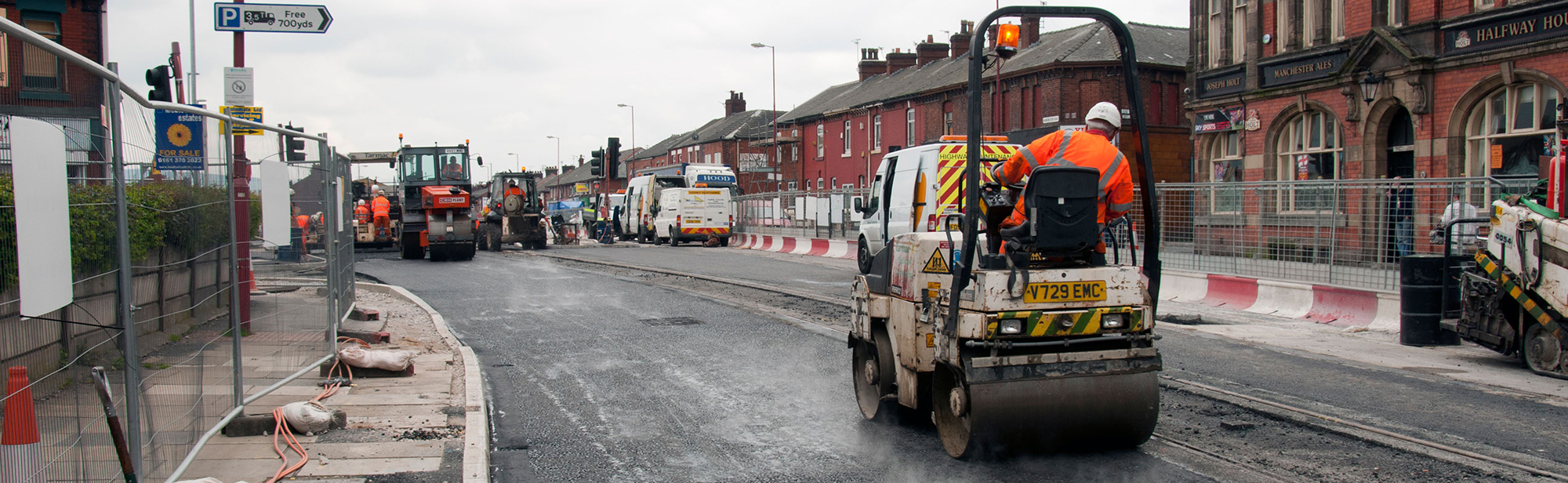
Many British cities suffer from poor connectivity because of bad public transport and car congestion at peak times. This can be a severe break on the economic potential of our large towns and cities. If we are to get all parts of Britain growing then we must have cost-effective investment options. However, Britain has some of the highest transport infrastructure costs in the developed world. On average, the UK pays 65% more per unit of infrastructure than comparable countries26. This translates into around £8.3 billion a year wasted, or £122 per person, due to spending failing to deliver equivalent infrastructure. Costs are consistently higher across all modes.
We compared 121 road projects, 224 rail and tram projects and 36 nuclear projects. UK road projects cost 23% more than in peer countries, while rail projects are even more expensive at 93% more.
These figures are not raw comparisons of how much is spent. We control for project size, tunnelling share, station and junction counts, urban or rural location, population density, construction duration, and the technology used. For instance, we compare a British rural motorway to a French rural motorway; a London metro to a Paris metro; a UK nuclear plant to a Korean one of similar size.
Without those controls the headline figures would look different by type of infrastructure. UK road and nuclear costs would appear even higher than reported, because UK projects in our sample are concentrated in dense urban areas (road) or use smaller, older reactor designs (nuclear). Rail moves the other way: without controls, UK rail looks cheaper than that of peers, because our sample is tram-heavy, and trams cost less per kilometre than the metros and heavy rail that dominate peer samples. However, when we compare like with like, tram to tram and metro to metro, we find that there is in fact a 93% UK rail premium.
All this means that Britain’s headline investment figures are misleading. Although the UK spends around 0.95% of GDP on transport, the infrastructure we actually get is equivalent to just 0.57% of GDP, if it had been spent at European cost levels. This helps explain why Britain’s roads, railways, and urban transport systems tend to be worse than those in countries like France, Germany, and the Netherlands, despite higher spending.
 Cost Difference
Why British infrastructure cost more
The cost premium on British infrastructure is so high that it is unlikely to be the result of a single cause. A lot needs to go wrong to generate a 65% cost premium. We identify several causes: sclerotic planning, centralisation, inefficient procurement, and a lack of sustained investment pipelines all play a role. These causes interact and compound one another in ways that make each individual problem harder to fix.
Procurement and State Capacity
Britain's approach to infrastructure procurement has hollowed out the engineering expertise that lower-cost countries retain within the state. Most European countries maintain deep in-house technical capacity. Complex projects are designed internally before being tendered, giving the state both cost control and the ability to scrutinise contractor claims. Britain, by contrast, relies heavily on private consultants for design work, and typically bundles design and construction together in contracts intended to transfer risk to the private sector.
The consequences are significant. When projects finish, teams disband and institutional knowledge is lost. Each new project effectively starts from scratch, rebuilding expertise at cost. The feast-and-famine pattern of British infrastructure investment compounds this: Crossrail was the first major rail tunnelling project since the Jubilee Line extension in 1999, which was itself the first since 1979. At present there are no plans to deploy the tunnelling expertise built up on Crossrail on any subsequent project. Rail electrification illustrates the same pattern. For most of the last thirty years Britain has electrified few or no miles of track annually, with only occasional bursts of activity. Germany, by contrast, electrified an average of 200km of railway per year for decades although the rate has slowed in recent years,27 allowing consistent accumulation of expertise and steady supply chain development. For example, the Great Western Main Line electrification cost £2.8bn (around £11.5m per mile of electrified track) while Germany's electrification of the Ulm to Lindau line cost around €370m (£2.1m per mile of electrified track).28
In 2019 the International Transport Forum found that rail electrification cost between 0.5 to 2 million Euros per single track kilometre in Europe. In the UK costs in 2018 were estimated at £3.9 million pounds per single track kilometre.29
The risk-transfer model of procurement also often backfires. Contracts designed to insulate the public sector from cost overruns tend to reduce competition and push prices up accordingly. On one section of the A9 dualling in Scotland, only a single bid was received.30 When the state lacks the technical capacity to scrutinise contractor proposals, it is poorly placed to identify gold-plating or challenge inflated cost estimates. The informational asymmetry runs in one direction, and costs reflect it.
These four factors, a planning system that imposes both direct compliance costs and large indirect costs by blocking proven cost-reduction strategies; a centralised structure that misaligns incentives against development; a procurement model that has eroded state engineering capacity; and a stop-start investment pattern that prevents expertise and supply chains from developing, are mutually reinforcing. Fixing any one in isolation would help. But Britain's infrastructure cost premium is ultimately the product of all four working together.
Case Study: A9
Scotland has generally been more successful than other parts of the UK at delivering road projects, building more roads per capita and often doing so on time and on budget. However, even here, major projects have faced significant delays and cost pressures.
The dualling of the A9 between Perth and Inverness illustrates these challenges. Originally scheduled for completion by 2025, only 11 of the planned 83 miles had been delivered by that date. The expected completion date has now slipped to 2035.31
A key issue has been delays in the planning process. Initial estimates suggested that statutory approvals would take around six years. In practice, the process has taken far longer. Fifteen years on from the announcement the project would go ahead, and one year after the project was originally due to be complete, parts of the route are still awaiting planning permission.32
Financing challenges have compounded these delays. Changes to EU and UK accounting rules meant that the original funding model, which relied on a mix of public and private finance to keep debt off the government’s balance sheet, was no longer viable. As a result, a project that was already difficult to fund on time became significantly harder to deliver on schedule.33
Procurement decisions also played a role. In an effort to limit public sector exposure, the Scottish Government transferred substantial risk to contractors. While this increased cost certainty for the government, it reduced competition. For one section of the road (Tomatin to Moy), only a single bid was received.34 This was rejected as poor value for money, forcing the procurement process to restart and delaying the project by more than two years.
Even in the part of the UK that has performed relatively well on transport delivery, long planning timelines, funding constraints, and procurement choices have combined to drive delays and increase costs.
Planning and Regulation
The most visible driver of high infrastructure costs is Britain's planning and regulatory system. Compared to peer nations, it is more complex, more time-consuming, and more expensive to navigate. In some cases, as with the Lower Thames Crossing, the cost of preparing a planning application alone exceeds what other countries spend building comparable infrastructure outright.
Case Study: Lower Thames Crossing
The Lower Thames Crossing, a planned road tunnel linking Essex and Kent, illustrates the scale of the problem. Its planning application ran to 359,070 pages, involved around 150 staff, and cost almost £300 million to write. The environmental statement was over 12,000 pages long.35
The full project, 14 miles of road including a 2.6-mile tunnel, is estimated to cost between £9 and £10.6 billion. By comparison, Norway’s Lærdal Tunnel, the longest road tunnel in the world, cost around £140 million36. Differences in geology mean the UK project was never going to be this cheap. But the comparison is still stark: Britain has spent twice as much as Norway spent building the world’s longest road tunnel simply on planning.
On top of an environmental impact assessment that stretched to over 12,000 pages37. The application includes 31 “Principal Areas of Disagreement” summaries, 378 separate “Statements of Common Ground”38 with bodies ranging from Royal Mail to NHS North East London, and even a 38-page report assessing whether consultation on the consultation process itself had been adequate.39
This is not unique to mega-projects. Smaller schemes face similar burdens. Upgrading just four miles of the Newark Bypass to a dual carriageway required 66,000 pages of planning documents.40 Laid end to end, these documents would stretch around 12 miles, three times the length of the road itself.
Multiple government bodies can require design changes, impose additional conditions, and delay approvals at any stage of a project. Consultation requirements, often backed by the threat of judicial review, add further cost and uncertainty. The result is planning applications running to hundreds of thousands of pages, sustained legal and consultancy expenditure, and projects that take years longer to approve than equivalent schemes elsewhere in Europe.
Yet the direct costs of compliance (bat tunnels, environmental surveys, bespoke mitigations) account for only a small part of the cost increases caused by regulation. Regulation also imposes large indirect costs by undermining the strategies that reliably reduce infrastructure costs elsewhere. Four mechanisms matter most.
- A focus on process and risk aversion lead to gold-plating. Unwieldy process and the desire to avoid legal challenges requires those building infrastructure to be maximally cautious at every stage. The fear of judicial review, or that a regulator will impose expensive design changes later, means builders often gold-plate their designs. Because builders cannot be certain what regulators and courts will ultimately require, large sums are spent on compliance that goes well beyond what would actually be demanded.
- A broken system inhibits learning by doing. Costs fall substantially as construction teams repeat the same design across multiple projects. Welders at Hinkley Point C's second reactor building are working at four times the pace of the first, generating an estimated 30% cost saving.41 But frequent design changes, often demanded by regulators mid-project, prevent standardisation and erode these gains. What works for the first project must be redesigned for the second, resetting the learning curve each time.
- Uncertainty deters investment in supply chains. Fleet construction, building multiple projects in sequence using the same workforce, equipment, and methods, is one of the most effective ways to reduce infrastructure costs. South Korea builds nuclear plants at around a sixth of British costs in part because it has maintained a continuous construction programme since 1972.42 But supply chain investment only makes sense when there is a reliable pipeline of work. Lengthy planning processes and the risk of legal challenge mean that workers may sit idle and equipment unused for years between projects. Firms respond rationally by not making the investment in the first place. One consequence is that Britain’s biggest construction firms are small by international standards and rely heavily on subcontractors – reducing economies of scale and adding costs.43
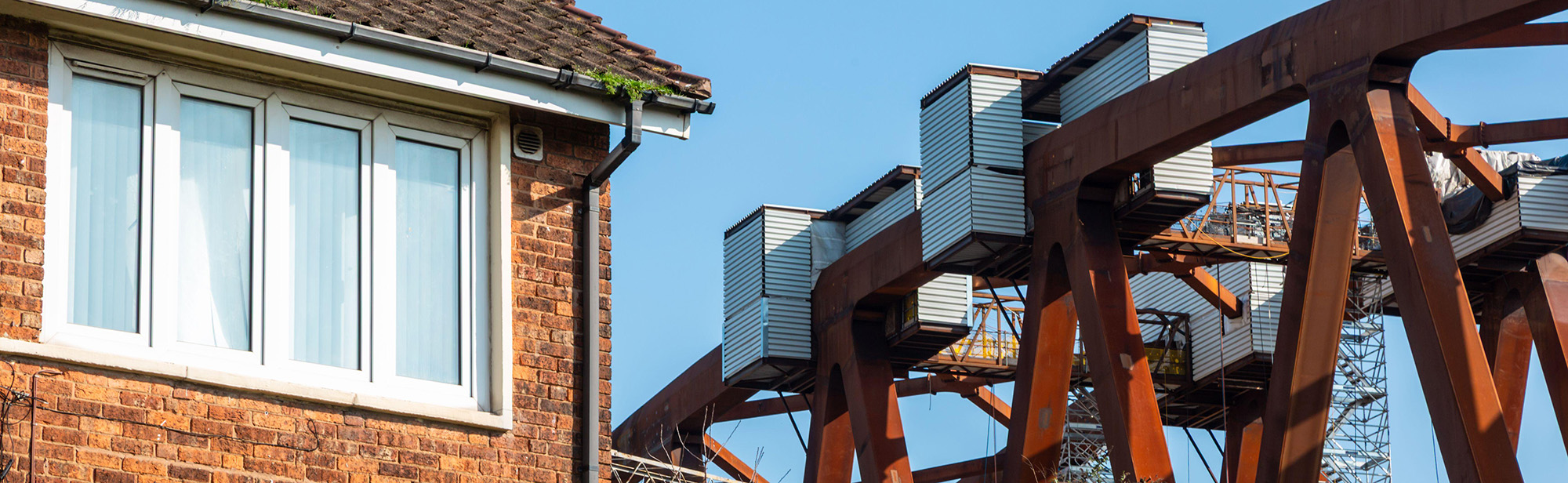
- Inflexible national rules block the use of proven construction methods that have worked well elsewhere. For example, in Britain tram tracks have to sit on concrete slabs of 500 to 1000mm in depth, to protect utilities underneath the tracks. However Strasbourg, France and Vienna, Austria laid tram tracks using a shallow bed that was then covered with grass. This leads to a depth of approximately 300-400mm. These shallower beds are standard in France..44 All of this extra digging and extra concrete adds cost, which is part of why Britain’s trams cost so much more than their European equivalents. Innovative local authorities such as Coventry City Council have creatively worked around these rules to reduce costs. Their Very Light Rail project uses a shallow 300mm trackform that can be laid without the expensive utility diversions that make conventional tram schemes so costly. It can be built at a cost of £7m per kilometre (making it much cheaper than many European projects), but has a lower capacity.
Centralisation and Misaligned Incentives
Britain is one of the most centralised countries in the developed world, and this exacerbates the planning problems described above. English local authorities have limited power to approve or fund new transport infrastructure independently. Permission for trams and metros must be sought from the Department for Transport; funding is allocated by central government from national budgets. The separation between who pays, who benefits, and who approves creates a systematic misalignment of incentives. In contrast in Spain, Germany and France local politicians make the decisions on what gets built and it is mostly funded by local taxpayers. Decentralisation allows incentives to be aligned.
This centralisation causes incentives to be misaligned for projects of national significance too. In France, localised taxation means that areas hosting nuclear power stations benefit substantially. Local governments in those areas have been able to offer residents free wi-fi, free electricity, and significant tax reductions45 because they are raising so much money from the nuclear power plant. This turns local politicians and residents into active supporters of nuclear development in their area. In England, by contrast, local authorities only retain at most half of the business rates generated by new local development.46 They do not capture, at least not directly, any of the employment or corporate taxes raised as a result of the project.
The British system goes further than mere indifference: it actively incentivises obstruction. Local authorities bear none of the costs when projects go over budget, but can use the planning system, the courts, and political lobbying to extract design changes that benefit their area at the expense of the overall scheme. With no stake in cost control, demands that have poor cost-benefit ratios are entirely rational from a local perspective.
For example, Tower Hamlets Council was supportive of the Crossrail project that run through their borough in London. However, this did not stop them submitting a list of objections that ran to 96 clauses.47 After extensive negotiations, Crossrail Ltd resolved all but two by giving in. Later, when the project’s plans changed slightly, Tower Hamlets submitted yet more objections: to the use of a local park as a temporary construction site, on the size of Whitechapel Station (and whether it should encompass a nearby McDonald’s), to some vacant land being used by another rail contractor, and to night-time closures of the Blackwall Tunnel Approach Road.48 There is no evidence that anyone ever conducted even a rudimentary cost benefit analysis on these changes, all of which added to the bill. This is for an infrastructure project the local council actually supported, the councils who oppose infrastructure projects are incentivised to be much more obstructive.
France offers an instructive contrast. Benefiting local governments there contribute a large percentage of the cost of major infrastructure projects,49 giving them a direct stake in keeping costs down. Local authorities can still request design changes, but are expected to pay for them if granted. The system is far from perfect, France's national audit office has documented cases where paid-for changes contradict the original intent of a scheme,50 but the incentive structure is fundamentally healthier. In Britain, local governments see few of the benefits when schemes go well and are insulated from the costs when they go badly. Rather than acting as partners and promoters of infrastructure, local authorities too often become obstacles, using projects to extract marginal local benefits at disproportionate cost to the public purse.
Case study: Edinburgh Tram
The first phase of Edinburgh’s tram is a good example of how British infrastructure costs are driven up not just by bad luck or difficult engineering, but by poor project setup and weak governance. The project was approved in 2007 on the basis that Phase 1a could be delivered within a £545 million funding envelope and opened by summer 2011.51 In the end, the line that opened in May 2014 was shorter than planned, running only from the airport to York Place rather than Newhaven (2.9 miles short of the planned 11.5 mile route), and cost £836 million.52 The core problem was that decision-makers were given a misleading sense of certainty. Contracts were signed before the design was mature, before utilities had been properly mapped and diverted, and before key approvals were in place.53 A project that was supposed to transfer risk to the private sector instead became trapped in disputes, delays and cost escalation. At £96 million per mile it was one of the most expensive tram projects in the world.
However the second phase of Edinburgh’s tram construction was much more successful, even if still significantly more expensive than most European counterparts. It cost £35 million pounds less per mile than phase 1, and was delivered on time and on budget.54 This highlights how having a steady stream of infrastructure projects allows lessons to be learned and teams to retain their skills reducing costs.
 Investment Shortfall
Britain’s high infrastructure costs are creating the equivalent of £40bn investment shortfall
Britain may invest more public money into transport infrastructure than most countries, but the high cost of building new trains, trams, and roads means we don’t actually get more (or better) transit infrastructure as a result.
Infrastructure cost expert Alon Levy notes that if Britain could build as cheaply as the Nordics, then for the same money as Crossrail (the Elizabeth Line) London could also have Crossrails 2 through 5 and extend the Victoria, Bakerloo, and Metropolitan lines.55
Between 2015 and 2023, Britain invested on average £308 per person per year on road and rail infrastructure. This was £37 more than France and £57 more than Germany. However, Britain pays a 65% cost premium for infrastructure over France, Spain, Germany, and Italy. For every £1m spent on infrastructure in the latter four countries, Britain must spend £1.65m to get the same amount of rail or road.
When you adjust for Britain’s 65% cost premium over peer countries, Britain’s £308 per head becomes just £186. Britain goes from investing more than £37 more than France and £57 than Germany, to investing £85 and £65 less respectively.
Or put differently, if Britain’s cost-premium over European peers was eliminated, our £21bn of annual investment (average 2015-2023) in transport infrastructure would secure 65% more infrastructure per pound spent. Over the course of a Parliament, Britain would, in effect, have £41.5bn more of actual transport infrastructure for the amount it already spends. Merely halving Britain’s cost premium – British projects would still cost 32.5% more — would still unlock an additional £15.7bn worth of infrastructure over five years.
What could £41.5bn buy?
At European prices, Britain could buy an extra £41.5bn worth of transport infrastructure over a five year period without raising an additional penny in tax or increasing borrowing. This would be transformative.
For example, England is spending £27bn on its third Road Investment Strategy (RIS 3) over the next five years. Although a large sum, it represents a real terms (accounting for inflation) cut of around 20% from the previous Road Investment Strategy (RIS 2) budget and an even larger cut to spending on new roads and upgrades of England's motorway and A-road network (down to £4bn from £14bn in RIS 2, though only less than £9 billion was actually spent). If Britain's infrastructure costs fell to European levels, it would be possible to turn RIS 3 from a 20% real terms cut to a 10% real terms rise (£27bn to £37.5bn) entirely reversing the £10bn cut to spending on new roads and upgrades in England.
Cancelled projects such as the A1 Northumberland dualling (£500m)56 and the A47 Wansford to Sutton dualling (£100m)57 could be funded, along with long-delayed schemes like the A120 Braintree to A12 dualling (£1.3bn)58 — a key freight and commuter route connecting Stansted Airport to Harwich port that has been stuck in the pipeline for over a decade. Other potential schemes in England upgrades to the M1 between Doncaster and Darrington (£1.3 billion),59 the A303 between Amesbury and Berwick Downs (£2.35 billion),60 Junction 8 of the M27 (£50 million)61 and the A27 between Worthing and Lancing (£20 million)62 dualling the A358 from Taunton to Southfields (£328 million)63 and the Acle Straight (£400 million)64 and new roads such as the Princess Way scheme in Liverpool (£250 million)65 and the Arundel Bypass (£630 million).66 Some of this budget could be reallocated to the devolved administrations and could be used to pay for a Third Menai Crossing (£400m)67 connecting the island of Anglesey to mainland Wales and repair the Woodside Viaduct on the M8 in Glasgow.68 This would still leave over £3 billion for other road projects, which would be enough to turn 79 miles of A roads into dual carriageways or widen 151 miles of motorway.69 This surplus could be used to fund schemes proposed as part of the Roads Investment Strategy that have been cancelled.70

This would represent a major step-forward in road investment, but still leave £27bn to invest in the rest of the transport network.
One key area for investment would be rail electrification. Just 38% of Britain's railways are electrified. By contrast 62% of German railways, 61% of French railways, and 100% of Swiss railways are electrified. Railway electrification in Britain is also expensive by international standards.
For the last 50 years, Germany has electrified an average of around 200km of rail annually. By contrast Britain has followed a feast and famine approach – in more than half of the last 30 years, Britain didn't electrify a single mile of track.
To meet the rail industry's emission reductions target, Britain will need to electrify around 190 miles of track every year until 2050. Costs vary between projects – older lines are typically more expensive to electrify – but at current British costs averaging around £5m per mile, it would cost around £1bn per year to electrify enough rail to meet the rail industry's decarbonisation target. As it stands, Britain is set to electrify fewer than 30 miles of railway per year over the next five years. If that level were raised to 190 miles per year, then it would cost around £1bn per year (or £5bn over five years). This, plus the roads investment, still leaves £22bn left over to upgrade Britain’s transport network.
What could that remaining £22bn be spent on?
Some of our busiest (and most delayed) railways are already electrified, however they are constrained by other factors. For example, the Selhurst junction near East Croydon station is one of biggest rail bottlenecks in the country affecting 25 million passenger journeys each year. Too few tracks north of East Croydon mean that delays can have huge knock-on effects throughout the rail network. Services through central London (Blackfriars, City Thameslink, St Pancras) and out to Cambridge, Luton, and Bedford are all constrained by the Croydon bottleneck. The bottleneck also is holding up the expansion of Gatwick Airport as targets to increase the share of visitors via public transport are dependent on more capacity on the Brighton Main Line. A scheme to build two additional tracks north of East Croydon (and change other layouts) could unlock an extra 4-6 trains per hour at a cost of £2.9bn.
The Castlefield Corridor in Manchester is another major bottleneck. Local, regional and airport trains are all forced to share a two track corridor between Deansgate and Piccadilly in Manchester, with Platforms 13 and 14 at Piccadilly a major pinch point. When one train is delayed, the next train is often forced to wait behind. As a result, delays can cascade through the network. One option to fix this would be to build an underground ‘crossrail-style’ through-running line with a limited number of underground stations designed to take the strain off existing pinchpoints. There are proposals, put forward by Greater Manchester Mayor Andy Burnham, for an even more expansive underground network but even a more modest scheme focused solely on the Castlefield bottleneck could still have huge benefits allowing more trains into (and through) Manchester and improving reliability. This wouldn’t be cheap – it would cost between £5bn and £10bn at British construction costs (depending on the number of stations and assumptions about tunneling.
The key barrier to both schemes are concerns around cost, but would be easily affordable if Britain’s cost premium fell to European levels.
Since the turn of the century, Europe has seen a tram renaissance. Twenty-eight French cities have built or expanded a tramway system in that time. Around sixty German cities now have trams. With just three exceptions, every French city with more than 150,000 residents has a light rail system or metro. By contrast, Bristol (population: 470,000) and Leeds (population: 810,000) are without a tram or light rail system. In fact, just seven British cities have a tram.
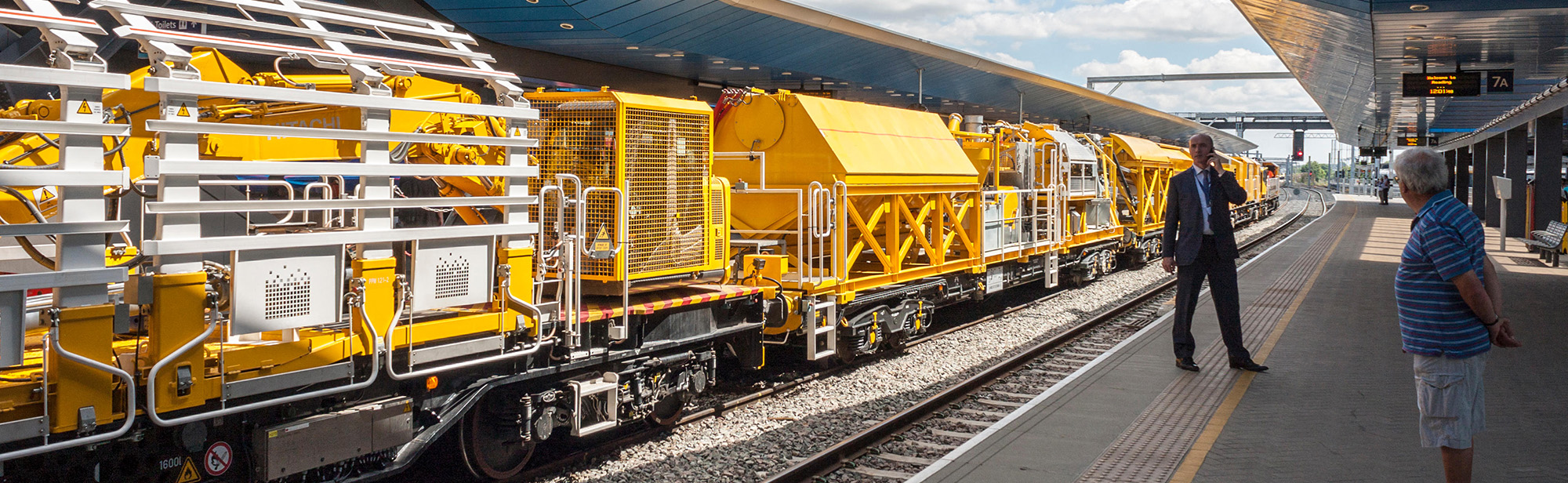
As noted in section two, tram networks in Britain are far more expensive to build than on the continent. Of the 10 most expensive projects (on a per mile basis) in Britain Remade's Tram Cost database, five are British. Even at current British costs of around £87m per mile, the remaining £13.1bn would be enough to build around 138 miles of tram. This could mean a 35 mile network for Leeds and West Yorkshire, a 22 mile tram for Bristol, an 18 mile tram for Cardiff, a 14 mile tram for Leicester, a 12 mile tram for Coventry, a 20 mile system linking Southampton and Portsmouth, and a 10 mile network for Plymouth — with enough left over to fund almost 20 miles of extensions to existing tram systems in Manchester, Birmingham, Edinburgh or Nottingham. If Britain's rail and tram costs fell to European levels, the same money would go almost twice as far.
The above analysis is premised on the idea that if Britain's cost premium over European peers was eliminated entirely, existing transport spend could buy an additional £40bn worth of investment over five years. In reality, eliminating this cost premium is likely to require deep reform of planning and procurement policy. It may also take time with reforms reducing costs through learning-by-doing over time. However, even if the reforms were only able to reduce the UK's cost premium by a quarter – in other words, British projects would still cost 48.75% more than European peers – it would still allow us to get £7.1bn worth of additional infrastructure over a parliament without increasing spending. That would still be enough to electrify 190 miles of railway per year for five years, fix the Croydon bottleneck, fund cancelled road schemes like the A1 Northumberland dualling and the A120 Braintree to A12, and build a Third Menai Crossing.
 Conclusion
Conclusion
Britain invests far too little. Yet, Britain’s under-investment has often been misunderstood. The key problem is that our businesses invest less than their foreign counterparts. There are likely multiple reasons for this under-investment, our analysis of public investment points to one: cost. British infrastructure buildout is stunted and expensive due to our lack of state capacity. When Britain’s public sector invests in new transport infrastructure, we pay a large premium over our international counterparts. Every £1 spent on roads, railways, and trams in Britain buys just 60p’s worth of what it would on the continent. If Britain’s 65% cost premium over European peers was eliminated, Britain’s £21bn (£308 per head) annual spend would buy the equivalent of £34.7bn of infrastructure at today’s prices.
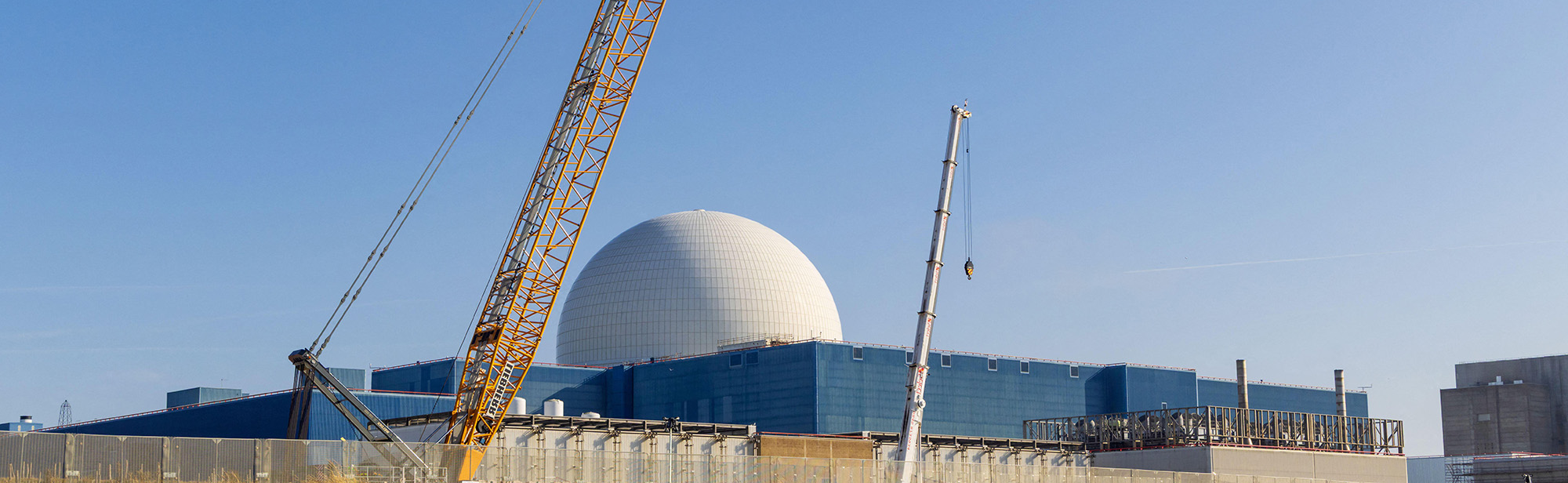
This analysis is limited to transport, yet there is evidence Britain infrastructure cost premium applies beyond road and rail. Hinkley Point C, the first nuclear plant built in Britain in three decades, is on course to be the most expensive ever built – six times more expensive than South Korean plants and 77% dearer than France’s Flamanville 3 plant (which uses the same EPR design).
It is likely that the underlying causes of high infrastructure costs, most notably planning regulations, also affect the private sector. While public investment projects can be justified on a wide range of grounds, business investments only go ahead when investors feel confident they will make a reasonable return. The causes of high infrastructure costs therefore may push many private projects that would be investable in Europe or the US to the point of unviability. For example, in 2023 London was the most expensive major European city to build a data centre, costing 12% more per Megawatt of capacity than in Amsterdam and 18% more than Vienna.71
The high cost of new transport and energy infrastructure is likely to also reduce the potential returns of private investment. Other than London, Britain’s cities tend to have worse road and rail connectivity than their European or US counterparts, reducing the availability of labour. Additionally, the high cost of building nuclear has contributed to the UK’s heavy exposure to spikes in the price of oil and gas. British businesses must contend with the highest industrial energy prices in the developed world. As a result, investments in equipment for energy-intensive industries that may be viable in the US or Europe, may be unviable here.
Most attempts to raise Britain’s persistently low levels of investment have focused on the demand-side: reforming the tax system to improve the incentive to invest (Full Expensing) or consolidating pension funds and creating new mandates to invest in high-growth British businesses. There may be a strong case for both policies, though there are certainly risks to the latter, but neither addresses Britain’s fundamental problem: that rules and regulations that make building more expensive (and simply harder) than it needs to be.
 References
References
1 Author’s calculation based on European Investment Bank. (n.d.). TGV Sud Europe Atlantique. EIB. TGV South Europe Atlantic cost €7.2bn in 2011 prices, equivalent to £8.2bn in 2024 prices, or £45m per mile, compared with HS2 spend to date of £46bn, equivalent to £328m per mile. HS2 is likely to cost substantially more.
2 The main specification controls for project scale, intervention type, engineering complexity (tunnelling and elevated share), urban-rural environment, and time.
3 Office for National Statistics. (2025). Business investment in the UK: July to September 2025 revised results. ONS.
4 UK GDP at current market prices was £3.04 trillion in 2025. Office for National Statistics. Gross domestic product at market prices: Current price: Seasonally adjusted £m (YBHA).
5 World Bank. (n.d.). Gross fixed capital formation (% of GDP). World Bank Open Data.
6 Office for National Statistics. (2026). Gross fixed capital formation – by sector and asset. ONS.
7 HM Treasury. (2024, January 30). Spring Budget 2023 – Full expensing. GOV.UK.
8 Office for National Statistics. (2026). Gross fixed capital formation – by sector and asset. ONS. Author’s calculation
9 UrbanRail.Net. (n.d.). France
10 Eurostat. Length of motorways and e-roads by country
11 Eurostat. Railway lines by maximum speed and electrification
12 Blackpool, Birmingham, Edinburgh, Nottingham, Manchester, Sheffield, and South London
13 Eurostat. Length of motorways and e-roads by country
14 Institution of Civil Engineers. (n.d.). High Speed 1 and St Pancras Station. ICE.
16 UK government and HS2 ltd https://www.gov.uk/government/speeches/hs2-6-monthly-report-to-parliament-may-2026
17 High Speed Rail (London–West Midlands) Bill: Select Committee report. UK Parliament.
18 HS2 Ltd. (2015). High Speed Rail in the Chilterns Part 2: Chiltern Long Tunnel Proposal. GOV.UK.
19 HS2 Ltd. (n.d.). Exhibit U: Chiltern Tunnel extension report. GOV.UK.
20 VolkerFitzpatrick. HS2 Align JV
22 https://www.youtube.com/watch?v=1Lb6JY1TmKg
23 Stewart, J. (2025). Major Transport Projects Governance and Assurance Review: The HS2 Experience (p. 8). Department for Transport.
24 Stewart, J. (2025). Major Transport Projects Governance and Assurance Review: The HS2 Experience (p. 71). Department for Transport.
25 Stewart, J. (2025). Major Transport Projects Governance and Assurance Review: The HS2 Experience (p. 20). Department for Transport.
26 Germany, France, Spain, Italy, South Korea and Canada
27 Hopkinson, B. (2023, October 27). Infrastructure costs: Electrification. Notes on Growth.
28 Fender, K. (2021, December 15). New regional services introduced across Germany. International Railway Journal.
29 UK Parliament. (n.d.). Written evidence: Rail electrification costs. UK Parliament.
30 Transport Scotland. (2023, February 8). Parliament updated on A9 dualling programme.
31 Safer Highways. (2024, January 4). A9 dualling delayed by ten years as new plans revealed
32 Cameron, G. Why Scotland’s biggest roadworks are taking forever — 11 miles in 10 years. The Times.; For a full list of sites still ‘in preparation see: Transport Scotland | A9 dualling Perth to Inverness
33 Scottish Parliament Citizen Participation and Public Petitions Committee. (2024, November 1). Inquiry into the A9 Dualling Programme. Scottish Parliament.
34 Transport Scotland. (2023, February 8). Parliament updated on A9 dualling programme.
35 UK Parliament. (2024, November 29). Lower Thames Crossing: Written question 15444. UK Parliament.
36 Britain Remade. Revealed: How the Lower Thames Crossing is breaking records for all the wrong reasons
37 Ibid.
38 Planning Inspectorate. (n.d.). Lower Thames Crossing project documents: Statements of Common Ground
39 National Highways. (2022). Lower Thames Crossing: 5.5 Statement responding to Local Authority stated positions on Adequacy of Consultation. Planning Inspectorate.
40 Britain Remade analysis of Planning Inspectorate data.
41 Construction Enquirer. (2024, July 4). Hinkley C second reactor being built 20%–30% faster.
42 World Nuclear Association. (n.d.). Nuclear power in South Korea.
43 Deloitte. (2025). GPoC 2024: Global Powers of Construction. Deloitte Spain.
The largest UK construction firm (Balfour Beatty) is the 32nd largest globally. Much smaller economies like Sweden and Austria have a larger firm while Italy, France, Spain and South Korea all have 2 or 3 firms larger than the largest UK firm. Large UK firms make up just 2.9% of global sales for large construction firms, compared to 4.9% for Spain and 8.3% for France.
44 Dumitriu, S., Hopkinson, B., Boys Smith, N., Milner, D., Payiatis, G., & Leahy, E. (2024). Back on track: How to build new trams in the UK and get Britain moving (p. 19). Britain Remade & Create Streets.
45 Alex Chalmers. (2025). How France achieved the world’s fastest nuclear buildout. Works in Progress.
46 House of Commons Library. (n.d.) .Reviewing and reforming business rates. UK Parliament.
47 Tower Hamlets Council. (2006). Crossrail petition: AP Council, 21 June 2006. Tower Hamlets Council.
48 House of Lords Select Committee on the Crossrail Bill. (2008). Crossrail Bill: Minutes of evidence, questions 2000–2019. UK Parliament.
49 Région Nouvelle-Aquitaine. (n.d.). La LGV, alternative à l’avion et à la voiture dans le Sud-Ouest; Cour des comptes. (2013). La participation des collectivités territoriales au financement de la ligne à grande vitesse Est (LGV Est) (p. 5).
50 Cour des comptes. (2013). La participation des collectivités territoriales au financement de la ligne à grande vitesse Est (LGV Est): Des contreparties coûteuses, une gare de trop (p. 3).
51 Audit Scotland. (2011). Edinburgh trams: Interim report (p. 5).
52 Ibid. (p. 28).
53 Ibid. (p. 63-64)
54 City of Edinburgh Council. Launch of Trams to Newhaven passenger services.
55 Levy, A. (2019, June 24). Assume Nordic costs: London edition. Pedestrian Observations.
56 https://www.bbc.com/news/articles/cpdxvppgjj0o
57 https://www.bbc.com/news/articles/c5ypl7djzr2o
58 http://nationalhighways.citizenspace.com/he/a12-chelmsford-to-a120-widening-scheme-23-to-25/results/a12chelmsfordtoa120wideningjunctions23to25-frequentlyaskedquestions.pdf pg 3, figure adjusted for inflation since 2020
59 https://www.constructionnews.co.uk/sections/news/dft-reveals-values-and-timescales-for-billions-of-pounds-of-projects-20-05-2022/
61 https://www.bbc.co.uk/news/articles/c1dpglr360ko
62 https://nationalhighways.co.uk/our-roads/south-east/a27-worthing-and-lancing-improvements/
63 https://www.bbc.co.uk/news/articles/cn01y6ezr11o
64 Assuming similar costs per mile to to the dualling of another part of the same road https://nationalhighways.co.uk/our-roads/east/a47-blofield-to-north-burlingham/
65 https://www.bbc.co.uk/news/articles/cp35wxrq0n6o
66 https://www.newcivilengineer.com/latest/lessons-from-cancelled-320m-a27-arundel-bypass-where-inefficiencies-impacted-scheme-by-59-weeks-07-11-2024/
67 https://www.newcivilengineer.com/latest/third-menai-crossing-costs-treble-to-around-400m-28-10-2022/
68 https://www.transport.gov.scot/media/0x3j4udm/brochure-m8-woodside-viaducts.pdf
69 Costs vary significantly from region to region largely based on population density. Road projects in London are significantly more expensive than in rural Scotland.
70 Many are already listed above, others include works related to: A19 Seaton Burn, A64 Hopgrove, M1 Leeds Eastern Gateway, M1/M62 Lofthouse Interchange, M1 J35A-39, M6 J22, M6 J19-21A, Manchester South East Junction Improvements, A483 Pant-Llanymynech Bypass, M1 North Leicestershire extra capacity, M1 Leicester Western Access, A5 Hinkley to Tamworth, A47 Elm Road Junction, M11 Junction 13 Cambridge West, the Severn Resilience Package, A2 Brenley Corner, A3/A247 Ripley South, A2 Dover Access, A303 Phase 2 upgrade, A21 Safety package, A27 Chichester Improvements and the A38 Trerulefoot-Carkeel safety package.
71 Savills. (2024, May 30). Costs on the rise. Savills UK.